What Is Accelerated Freefall?
About AFF Training
Learn To Skydive Solo
 Learning how to go skydiving solo is one of the most rewarding endeavors on the planet!! You progress at your own pace, building on your knowledge and skills as you go, all while meeting amazing people from all over the world who share the same passion. It’s enriching, exciting, inspiring and, yep, incredibly empowering.
Our skydiving school is the only AFF program of its kind in the Midwest! Look within. Leap beyond. Enroll in the Start Skydiving Jump Institute!
What Is AFF?
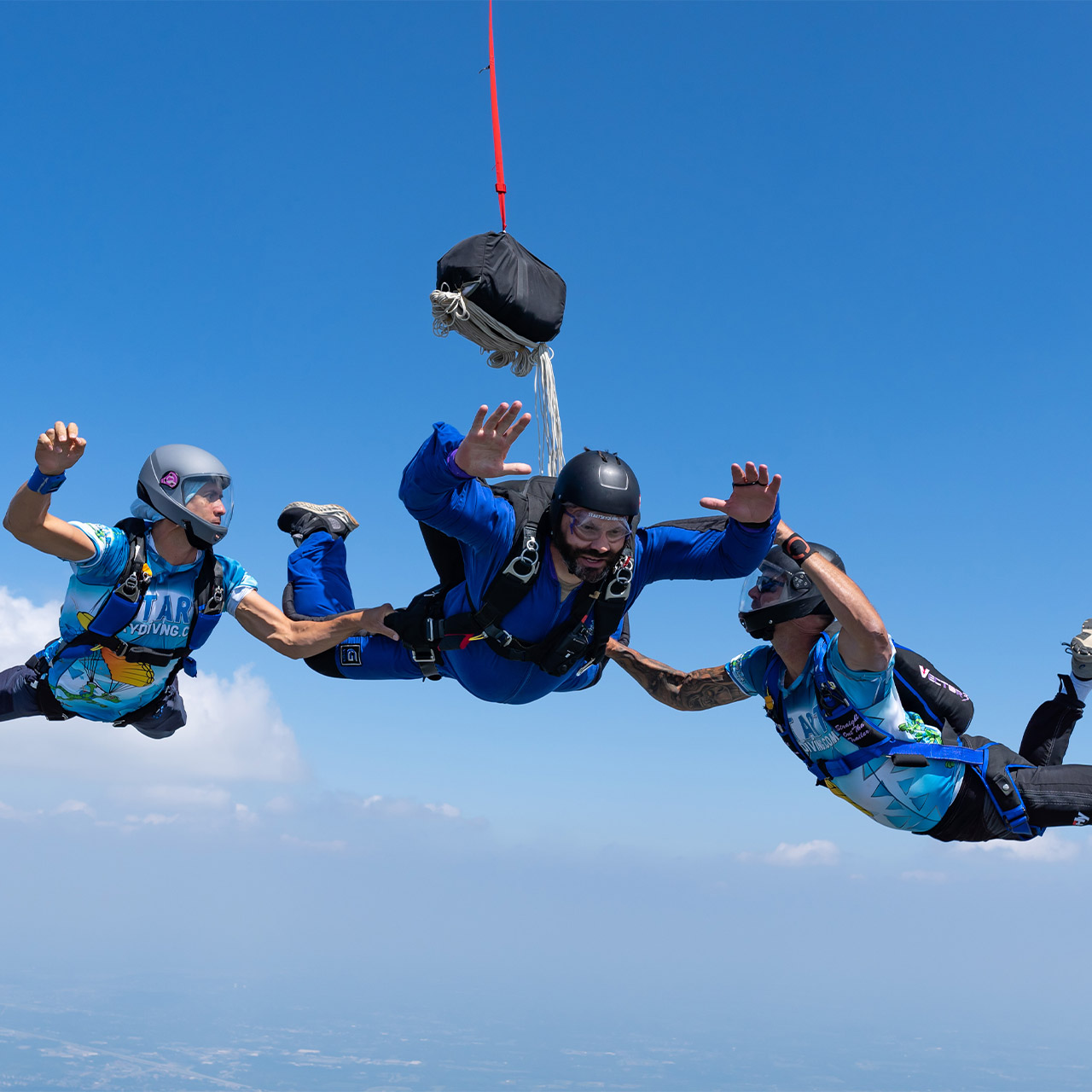
Accelerated Freefall (AFF) is a scaffolded program designed to provide the skydiving training necessary to get your skydiving license. It accelerates the learning process, granting agency to the student from the very first jump.
In as few as 25 jumps, you grow from a novice to a proficient skydiver, ready to ace your check dive and earn your United States Parachute Association (USPA) A License – the first of four license levels: A, B, C and D.
Best of all, you set the pace of your AFF course progression. Complete the curriculum in as few as 7 days, or stretch it out across the season; this is your journey.
Curricular Categories
In accordance with the USPA’s Integrated Student Program (ISP), the skydiving training curriculum is divided into categories (A-H), each with Targeted Learning Objectives (TLOs) that must be met before you progress to the next level.
At the Jump Institute, the path from beginner to licensed skydiver is divided into four distinct parts:
-
First Jump Course
-
Instructional Jumps
-
Coach Jumps
-
Checkout Dive
First Jump Course
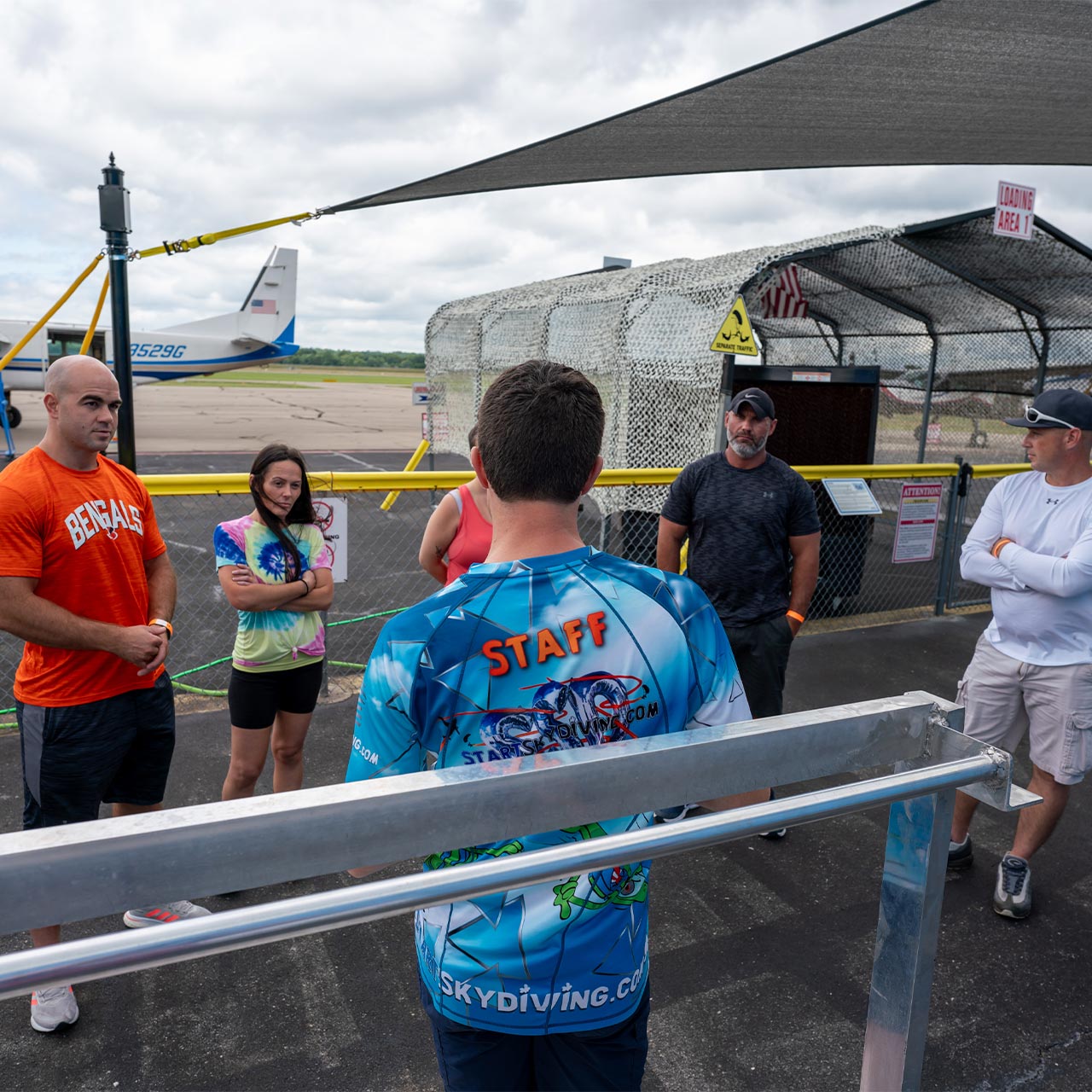
The First Jump Course (FJC) encompasses five to eight hours of ground school, followed by your first skydive, the Category A jump, and your first solo parachute flight. It’s not uncommon for students to complete ground school and their first jump in one day!
Once you have the basics down, it’s time to get up!
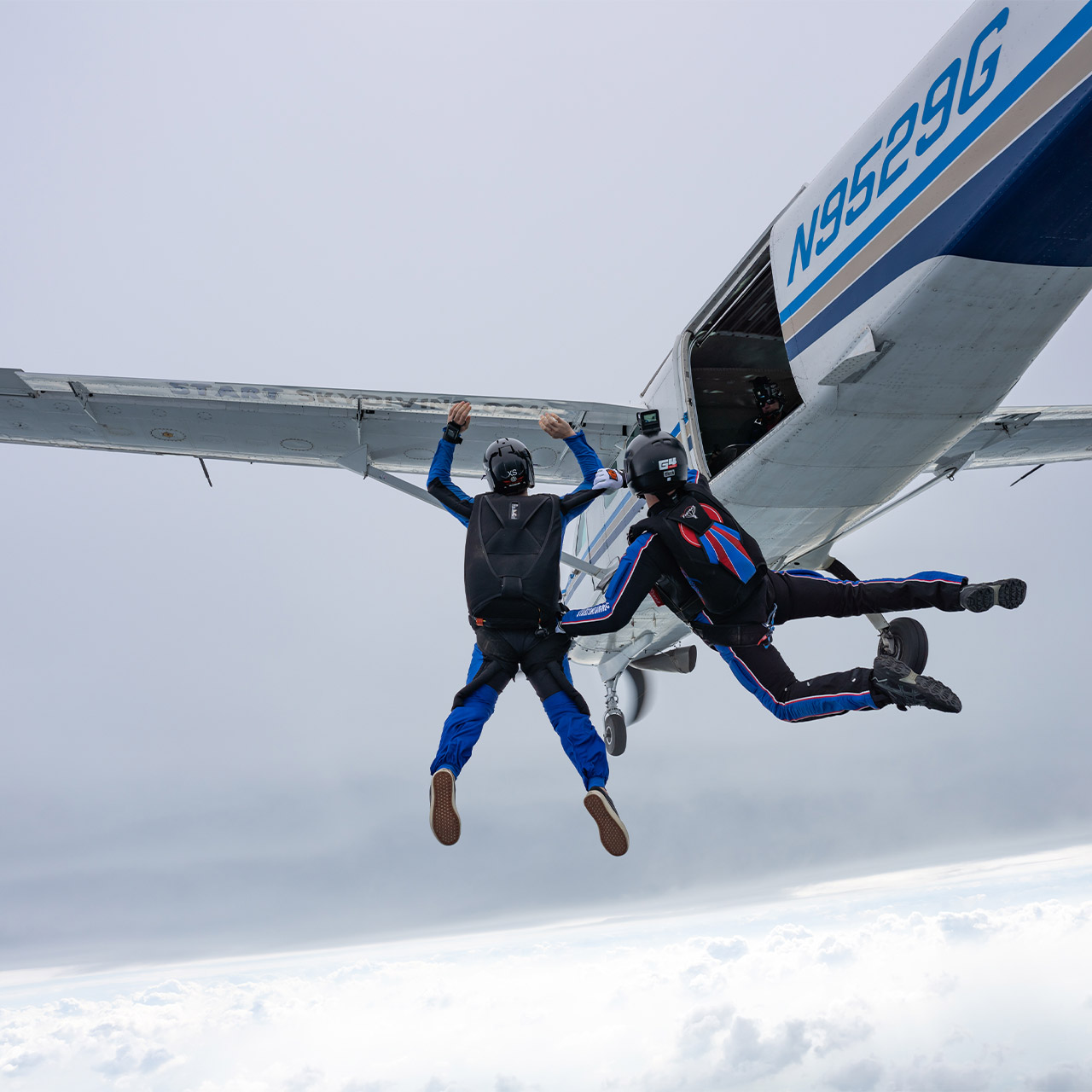
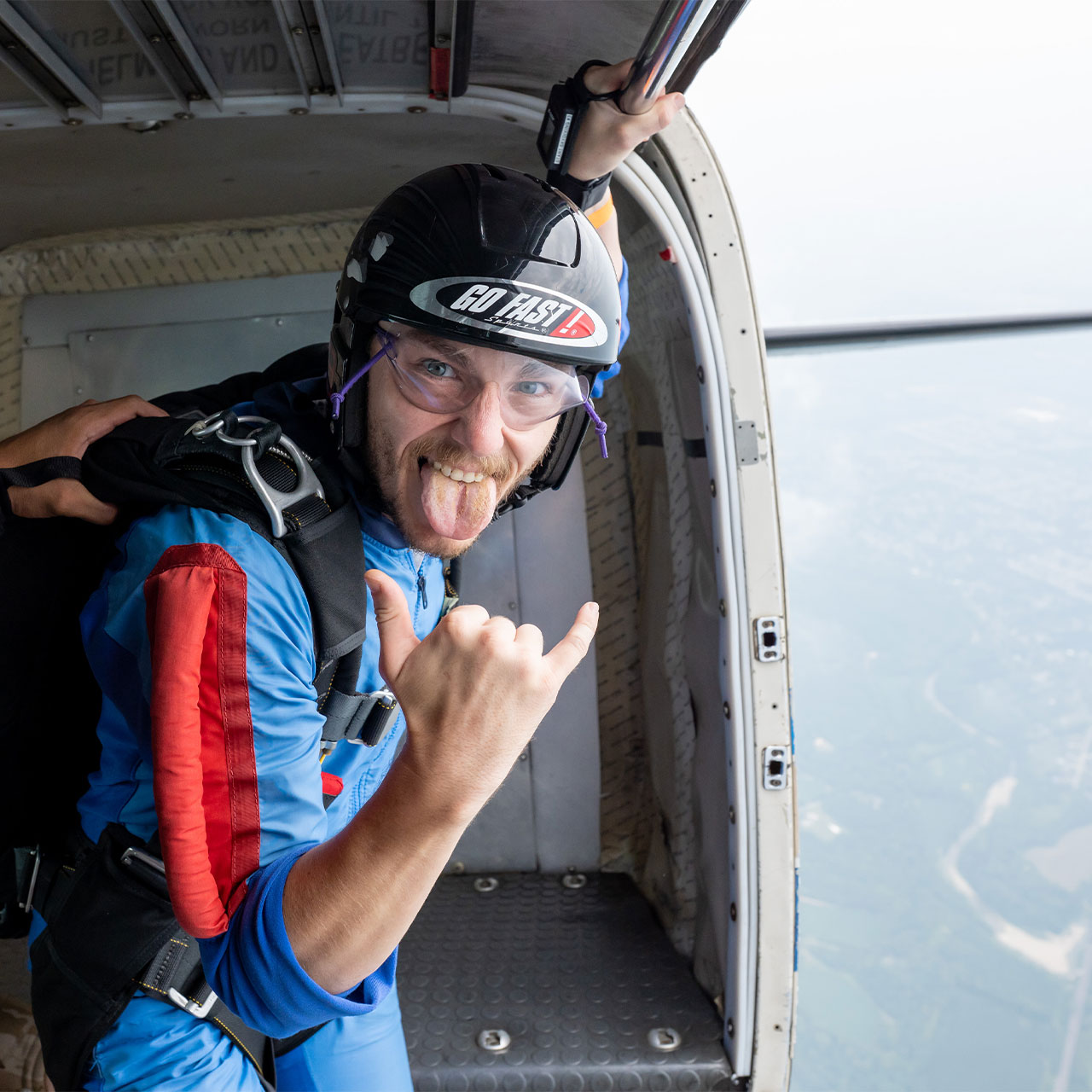
On your first jump, you’ll exit the aircraft between 10,000 and 12,000 feet – accompanied by two instructors – and experience 50 seconds of freefall! You’ll even deploy your own parachute at around 5,500 feet.
Instructional Jumps
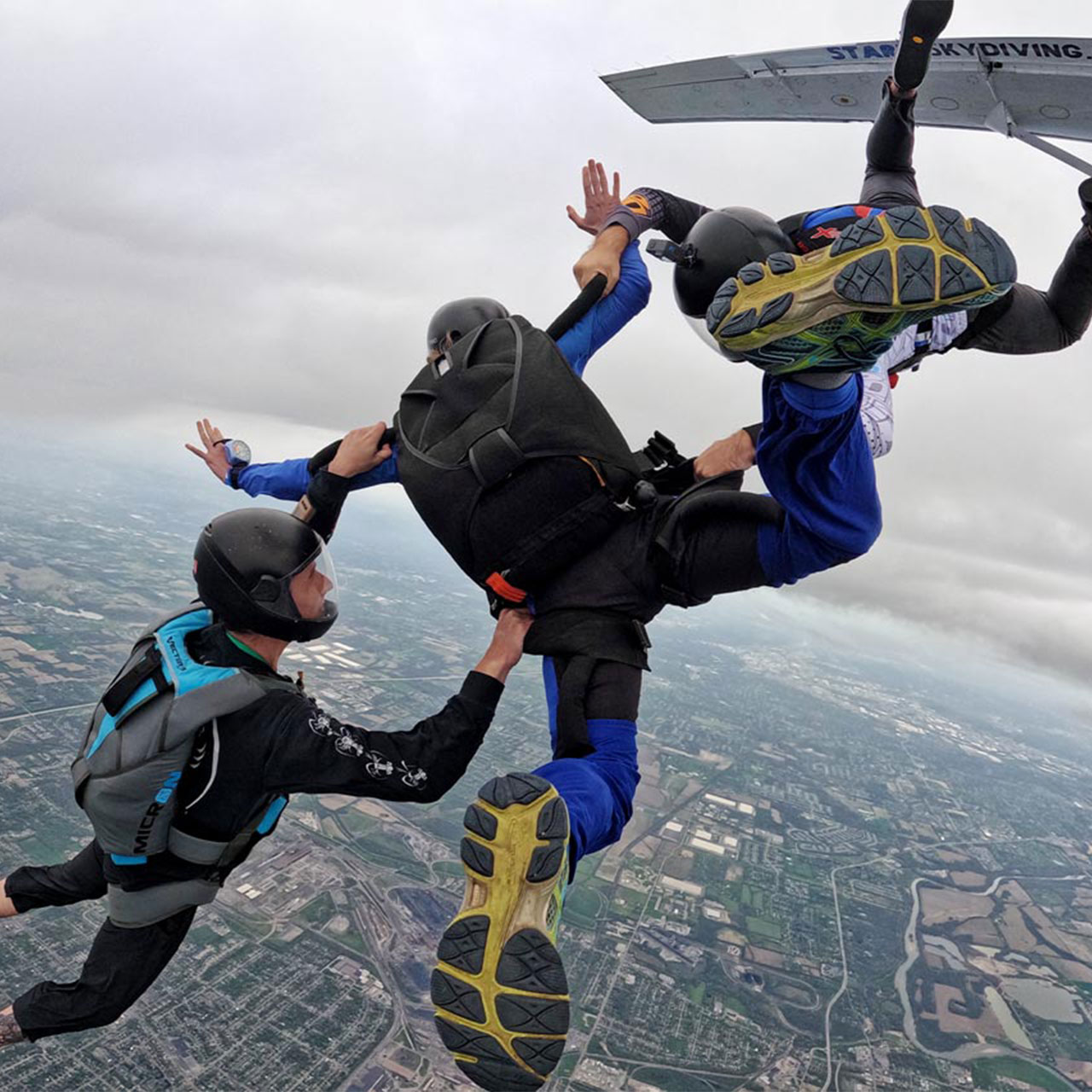
AFF Categories B through E teach the fundamentals of freefall across a series of eight jumps. Student jumps are first accompanied by two dedicated instructors … then one instructor … and then you fly solo.
These jumps concentrate on teaching basic safety skills such as altitude awareness, body position, stability during freefall and during the deployment sequence, and most importantly, a successful deployment sequence.
After Category E, students are cleared to self-supervise.
Coach Jumps
Once you are able to demonstrate mastery of each of the Category A through E learning objectives, you are cleared to advance to coach jumps.
Working one-on-one with a coach, you learn a variety of flight skills such as turns, tracking, forward and backward movement, docking, front loops, back loops, swooping, and diving exits.
After logging a minimum of 25 jumps, satisfying Categories F through H, and completing a packing class, you are officially an A License candidate!
Checkout Dive
When you’re ready to test for your USPA A License, you take an oral and written exam and perform an A License Checkout Dive with a USPA-rated AFF instructor.
To earn you A License, you must meet all of the criteria on the A License Proficiency Card. This includes demonstrating your exit and freefall skills, canopy skills, equipment knowledge, emergency review, and aircraft and spotting knowledge.
Last step is to mail your completed Proficiency Card to the USPA and get your skydiving certification – your USPA license number!
AFF Program Requirements
To enroll in the Start Skydiving Jump Institute, students must:
-
Be at least 18 (no maximum age limit)
-
Make 1 tandem (strongly recommended)
-
Weigh less than 235 lbs
-
Be in generally good health
Want to know about currency requirements, learning how to skydive with a disability or have other questions? Check out our FAQs or get in touch.